As some of you may or may not know, the slaughter of thousands of dolphins each year has just been exposed to the public in a movie called "The Cove"
I am also here to educate you about this issue I am terribly passionate about. Here is some facts from the coves website.
In Japan, fishermen round up and slaughter hundreds and even thousands of dolphins and other small whales each year.
In the small fishing village of Taiji, entire schools of dolphins are driven into a hidden cove after a prolonged chase. Once trapped inside the cove, the fishermen kill the dolphins, slashing their throats with knives or stabbing them with spears. The water turns red with their blood, and the air fills with their screams.
This brutal massacre — the largest scale dolphin kill in the world — goes on for six months of every year. Even more scandalous, members of the international dolphin display industry take advantage of the dolphin slaughter to obtain some few, show-quality dolphins for use in captive dolphin shows and dolphin swim programs.
It is commonly assumed that Japanese fishermen hunt dolphins to supply a small minority of Japanese people with dolphin meat. But unlike the expensive whale meat, dolphin meat is not considered a delicacy in Japan, and the real reason the Japanese government issues permits to kill dolphins by the thousands every year has nothing to do with food culture. It has to do with pest control. As shocking as it sounds, some Japanese government officials view dolphins as pests to be eradicated in huge numbers. During a meeting at Taiji City Hall, the fishermen of Taiji admitted this to us. "We don’t kill the dolphins primarily for their meat. We kill them as a form of pest control," they told us. In other words, killing the competition is their way of preserving the ocean’s fish for themselves.
The fact is this is unesccesary and the dolphins are slaughtered INHUMANELY!
The majority of people in Japan have no knowledge about the annual dolphin blood bath.
ALSO
Concealing this information from the public is a violation of Article 21 of the Japanese Constitution!
"The Japanese dolphin hunt will continue for as long as members of the international dolphinarium industry continue to reward the hunters for show quality dolphins, thereby making the hunt tremendously profitable."
http://www.takepart.com/thecove/ Is an EXCELLENT site to visit! It shows several ways you can help by signing petitions, spreading the word on facebook, learn more about dolphins in captivity and chosing the best fish to eat.
I purchased this book recently, Priceless - the vanishing beauty of a fragile planet, once of the best purchases I have ever made. The book, by Bradley Trevor Greive, which you may know from The Blue Day Book, which was highly popular.
This book, combined with stunning photographs from wildlife photographer MitsuakiIwago, has passages which really touched me. Breif and simple, it talks about the beauty of all animals, and the impact the daily lives of humans are having against their population.
It really touched me this book and im now 100% sure that this is something I am going to work towards my whole life. Conservation.
http://www.tarongafoundation.org/ is the foundation in which the book suports, which is part of Taronga Zoo and Western Plains Zoo Australia. Together, these zoo's are working hard towards education people about animals and working hard on the reproduction of endangered animals and releasing them into the wild.
You may think, when does this ever happen, zoo's are cruel?! Well, all people that care about animals one day hope to have a world without zoo's, where animals can live in harmony with humans and we do not have to have them in enclosures to ensure their species stay alive for centuries to come. A sucess story which I learned about in Priceless, is of the The Przewalski’s Horse.
The Przewalski’s Horse is the last relative of the wild horse, In May 1995, Western Plains Zoo reintroduced seven Przewalski Horses to Mongolia's Gobi Desert where they were last found in the wild. The Zoo is a proud partner in the continuing world wide captive breeding program which manages over one thousand horses. This is great news that they can be reintroduced to the wild!
Anyway, this book means a lot to me and it has stunning pictures which I now have on display in my house, they never fail to make me smile. If your interested in animal conservation, please visit http://www.tarongafoundation.org/ - This is one of my fave shots from the book...
They matter to me! If they matter to you, simply go to: http://www.animalsmatter.org/ and sign the UNIVERSAL declaration on animal welfare. It's a simple and quick way to show you care about the welfare of animals around the world!
As my laptop is with my mum as she is kindly repairing it, I thought I would post some gorgeous pics from national geographics animal photos weekly as part of friday ark. Enjoy these special moments captured by camera...
A mother giraffe nuzzles her baby girl two days after she gave birth in front of guests at the San Diego Zoo. Photograph by Ken Bohn/San Diego Zoo
Ready Eddy? A young seal named Eddy peers out from a basket en route to his release into the North Sea from the island of Juist.
Eddy was raised at a seal rehabilitation and breeding station in Norddeich, which cares for about 30 to 80 orphaned seals each year. Seals are released when they reach a minimum weight of 55 pounds (25 kilograms). Photograph by Philpp Guelland/AFP/Getty Images
Flinder's Bay, Australia, August 26, 2008--A rare albino southern right whale calf frolics in waters off the coast of Western Australia. It is believed to be one of only ten white whales in the world.
Locals named the eight-week-old mammal Wilgi Manung, which is an aboriginal name for white whale. It will swim to the Antarctic for summer feeding in about a month. Photograph by whales-australia.com/Steve Mitchell/Reuters
Bristol, United Kingdom, August 12, 2008—A curator at Bristol Zoo Gardens holds a recently hatched Chinese box turtle, which weighs a half ounce (15 grams) and is about 1.6 inches (4 centimeters) long.
"It is doing very well, eating plenty, and growing stronger every day," Tim Skeleton, curator of reptiles, said in a statement.
The sociable turtles, listed as endangered by the International Union for the Conservation of Nature (IUCN), are hunted for their meat, medicinal uses, and the pet trade. Story from national geographic.com
Another story from National Geographic website - its one of my faves!! This is just an amazing shot and it really took my breath away. He's just so tiny!!
Chengdu, China, July 28, 2008—One of four giant panda cubs born within 14 hours of each other stretches at the Chengdu Panda Breeding Research Center in Sichuan Province.
The birth of four pandas in quick succession is a rarity—and a boost to the population of highly endangered species. All four cubs stem from an artificial-breeding program. Two are twins.
The center is home to 71 pandas. Only about 1,590 remain in the wild, mostly in bamboo-covered mountainous areas. getty images
GORGEOUS photo. I LOVE Belugas Story from National Geographic website.
"Hamada, Japan, July 26, 2008—A beluga whale blows bubbles at an aquarium in Japan to the delight of visitors who have come by the thousands to view the spectacle.
The whale is one of three that learned the trick from scuba divers, who give the whales breaths from regulators to enable the whales to blow the bubbles.
The beluga is native to Arctic waters and considered a vulnerable by the International Union for the Conservation of Nature. Conservationists are petitioning the U.S. government to list an Alaskan population as endangered."Getty Images
"Schloss Holte-Stukenbrock, Germany, July 14, 2008—Three rare white lion cubs make their public debut at a wildlife park in north-central Germany.
The cubs are among of seven white lions born to two different mothers on June 30 in what park staff called a "giant surprise."
Despite their unusual look, white lions are actually African lions. A recessive gene causes their snowy white coats. About 30 white lions live in captivity worldwide. "
Monday, July 14, 2008
"What with our hooks, snares, nets, and dogs, we are at war with all living creatures." Seneca
The Lyre Bird. This is just amazing. How beautiful this birds song is just makes me love life. I also love the special effects it can do... "The fate of the creatures which share our planet lies entirely at the hand of mankind." - Sir David Attenborough
Just some of the victims of the Midwest floods in America. Thousands of stranded pets are being moved to shelters all over America and many orphaned wildlife is also being cared for. Images from nationalgeographic.com by Joe Raedle.
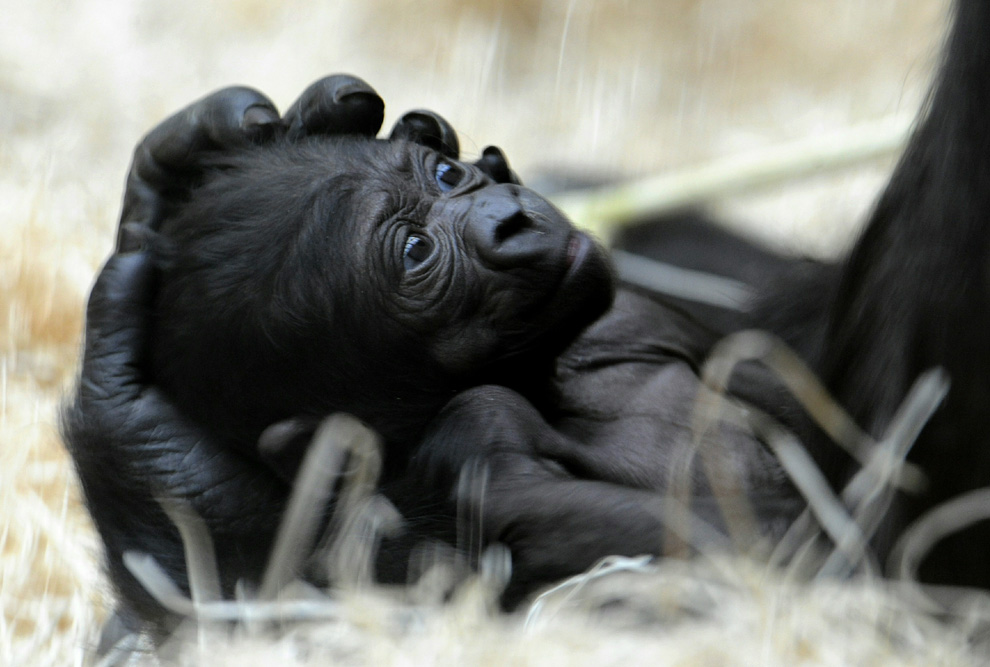


 I purchased this book recently, Priceless - the vanishing beauty of a fragile planet, once of the best purchases I have ever made. The book, by Bradley Trevor Greive, which you may know from The Blue Day Book, which was highly popular.


 Just some of the victims of the Midwest floods in America. Thousands of stranded pets are being moved to shelters all over America and many orphaned wildlife is also being cared for.


