Showing posts with label animal news. Show all posts

Wednesday, July 21, 2010

Australian Pork Update!

This morning Coles announced that their own-brand pork will be 'sow stall free' by the end of 2014. This is the most significant victory yet in the campaign for pigs and will force the rest of the industry to catch up!

I wrote a story previously about the disgusting state of the Australian Pork Industry, also showing videos of the gruesome truth. Pigs are among the most intelligent species on the planet, and yet have been subjected to one of the cruellest practices ever inflicted on animals in Australia. 'Sow stalls' are typically used in factory farming operations across the country to confine and isolate mother pigs during pregnancy. The national Code of Practice permits these animals to be confined in tiny crates, unable even to turn around for months on end, denying them exercise and any quality of life. As a result, pigs suffer painful physical ailments and even depression.

Since then, Tasmania's Industries Leader, Bryan Green, announced he will be banning cruel sow stalls, having them all wiped out in the state by 2017. This was a great step for pigs...no longer will they have to live a life of terrible suffering just to be slaughtered at the end of it.

According to Coles' press release "Our customers are becoming increasingly interested in welfare issues surrounding pig farming, with the use of sow stalls their greatest concern".

This is excellent news for consumers, as it makes buying cruelty free more accessible and a lot more affordable. Having cruelty free options readily available in supermarkets makes it a lot easier for the public to make the compassionate switch. It also puts the pressure on other leading supermarkets to make the same change.

It also makes me feel great to know that people out there are putting the pressure on big companies and voicing their outrage at the cruelty behind a lot of animal products. Its excellent that people are becoming more passionate and caring and want the cruelty free options to be the ONLY option.

I am delighted to share this news on my blog...its only a small step but it's a very positive one. You can help by taking two seconds to click a button and send emails off to Woolworths, IGA, Aldi etc and urge them to make the same change! Help here : http://www.animalsaustralia.org/take_action/sow-stall-free/

Remember, always buy cruelty free. More updates soon xx

info and photos courtsey of animalsaustralia.org

Friday, July 9, 2010

Australia's Poultry Shame!!

"An investigation into one of Australia's largest chicken meat producers that supplies major retail outlets has revealed routine and shocking animal abuse. Every year in Australia 488 million chickens endure brutally short and undeniably cruel lives inside factory farms. Animals Australia's investigation video shows baby birds suffering from heart disease, lameness, thirst, starvation and trampling inside a shed packed with over 40,000 birds.


Threatened by rising concern for the welfare of animals, Australia’s major chicken producers are attempting to mislead consumers with confusing terms such as ‘cage free’ and ‘free to roam’ — despite the fact that cages are never used in broiler facilities. The reality is that chicken meat from all major brands — including Steggles and Inghams — is factory farmed." - Animals Australia.

Watch the video of the investigation here to see just how shocking it is.

Chickens are intelligent animals that do not need to be treated this way. The crave stimulation and are slowly, slowly being tortured and dying painfully. Please...if you buy chicken ONLY by organic FREE RANGE! Cage free and free to roam are NOT free range...they are a play on words. Please take extra care when chosing animal products. Please, do not buy Steggles or Inghams. Open your heart and make small changes to make a difference in thousands of animals lives.

Warning. Disturbing images in this video. I cannot watch it anymore without losing it...

More videos from Animals Australia

please help here: Animals Australia

Saturday, May 15, 2010

My inspiration

/Mary Hutton is an inspiration to me. You may have heard of savethebears.org.au - you may not. Well to tell you a bit about how it came about I will tell you a bit about Mary.

She became passionate about saving bears after watching an ACA programme (rare for a current affairs programme to show something like this) about Asiatic Black bears held in coffin sized cages unable to move or turn with dirty catheters inserted directly into their gall bladder. These bears are kept this way as traditional Asian medicine uses bear bile so from the 80's, bears were kept in horrible conditions and milked for their bile.

First Mary set up a petition outside a shopping centre asking people to help free the bears. She received thousands of signatures and supports and in 1995 began free the bears as a non for profit charity.

She then joined forces with John Stephens who told her about the Sun bear, which are kept in restaurants and butchered for bear paw soup. John and Mary rescued a number of bears from Cambodia and brought these bears back to Australia to start a breeding  programme. With more bears needing help, then came along the Cambodian Bear Sanctuary, which is the world’s largest sanctuary for Sun bears and has educated hundreds of thousands of Cambodians about the threats facing their wild bear populations!

The next challenge was India and the rescuing the poor dancing bears. Very tough. The fund joined with the wildlife SOS and the first 25 bears entered the Agra Bear Sanctuary in 2002. in 2009 - “Raju” the last of India’s dancing bears is handed over, bringing the dancing bear trade to an end!! That's over 500 dancing bears rescued in India, an amazing achievement.

Mary is now at 71 years of age and is still fighting to bring bear bile farming to an end and strives to educate and strengthen law enforcement to help bears in need all over the world. Mary has helped the WSPA with their efforts in saving bears and also involved in bear sanctuaries in Cambodia, India, Indonesia, Laos, Thailand and Vietnam.. Mary message:  "Free the Bears fund is to protect, preserve and enrich the lives of bears throughout the world."

Free the bears have saved  in total an amazing 751 bears!! In India: 525, Cambodia: 140, Vietnam: 33, Laos: 23, Thailand : 25, Indonesia: 5.

Mary inspires me because she followed her passion of wanting to help these amazing animals that cant help themselves. She united other people with the same passion and shows there is hope and you can help. Sometimes with all the brutality I see animals going through, I lose hope. This shows me that I must not give up, that my passion will help and I will be dedicating my life to helping animals that cannot help themselves. My aim is to go over to volunteer in Asia one day, hopefully for a few weeks.

This is one of the many heroes out there and I will be sharing more.

To find out more about free the bears and their work, or to donate or help out, please visit http://www.freethebears.org.au/

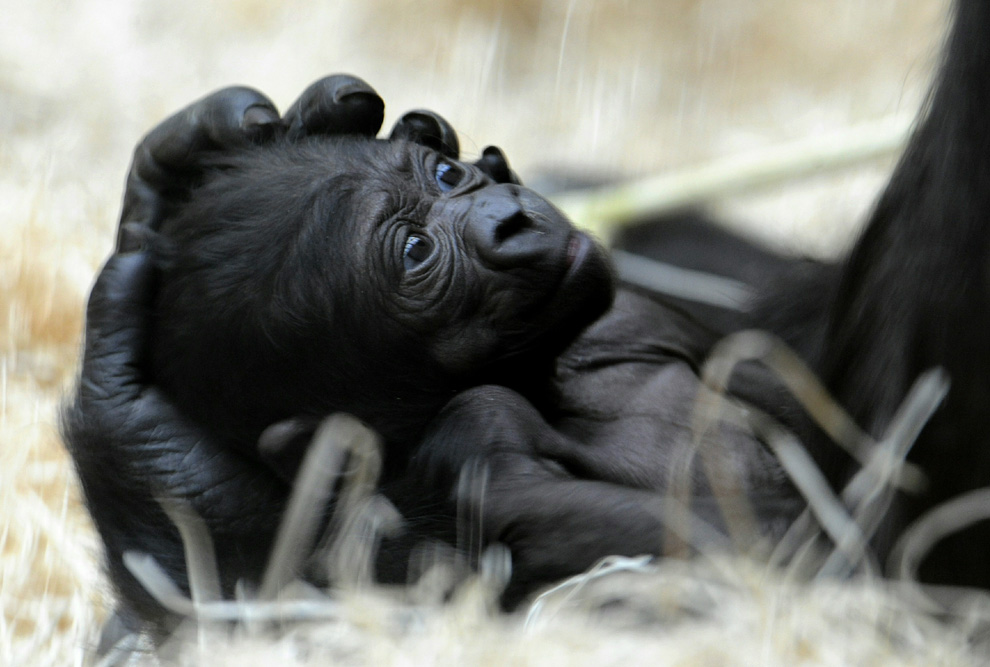
Beauty

"A nine-day-old gorilla lays in the hand of its mother Kijivu at the Prague Zoo on May 3, 2010"
A truly beautiful and moving picture.
Here are some amazing pictures of animals in the news lately at this link

Tuesday, April 20, 2010

Easy choices to make a difference


An interesting article I read through a GREENPEACE newsletter was about canned tuna. Most people know to only buy "dolphin friendly" - and it is very rare to find tuna now a can that does not have this label... in fact...my cat food even has this label!

Many of you may not know, as I did not know myself, that canned tuna is still hurting other precious marine life.

Did you know that canned tuna is Australia’s biggest selling seafood item. Yet none of our canned tuna brands use tuna that’s caught sustainably. Increasing demand for tuna has decimated global tuna stocks. And to make things worse, destructive tuna fishing methods kill other marine life such as turtles and sharks.


Supermarkets rack up over $300 million a year from canned tuna. By selling us tuna that’s not caught sustainably, supermarkets play a key role in the tuna crisis. It’s time they cease trading with companies that use overfished tuna species and destructive fishing methods.

BUT before you freak out and think "geez well what CAN I eat then??" Greenpeace have created an easy to read guide that shows you the brands that use the best/least harmful methods of fishing so you can make an informed decision when purchasing tuna

GREENSEAS and COLES are the top two brands in sourcing their tuna sustainably. You can find out more information here or at http://www.greenpeace.org/australia/issues/overfishing/our-work/cannedtuna and learn more about what brands NOT to buy and more about how these brands received their ratings.

We all care about our marine life and I share this information with you so hopefully we can all just make a better choice at the supermarkets and help preserve our oceans.

information sourced from Greenpeace

Vicky x

Tuesday, December 8, 2009

Australia's Dirty Secret

This post is going to be brief and straight to the point - I've written about the Australian Pork Industry before.
I'm still discusted to see no change. 60 Minutes on channel 9 finally told Australians about this disturbing truth.

Factory Farmed Animals. Discusting and cruel. Watch the videos - they speak for themselves. Unfortunetly, most Australians are not aware of the cruelty they are supporting by buying factory farmed products.

People need to know and see exactly what is being done to these animals. I am not saying don't eat them, but please do not support animal cruelty. These pigs have no need to spend their lives in such appalling conditions.

200,00 mother pigs are subject to this awful cruelty each year. It doesn't have to happen. By free range.


Help End Factory Farming at AnimalsAustralai.org


Help End Factory-Farming at AnimalsAustralia.org

Wednesday, November 4, 2009

Save & Free Dolphins!!

As some of you may or may not know, the slaughter of thousands of dolphins each year has just been exposed to the public in a movie called "The Cove"

I am also here to educate you about this issue I am terribly passionate about. Here is some facts from the coves website.


In Japan, fishermen round up and slaughter hundreds and even thousands of dolphins and other small whales each year.
In the small fishing village of Taiji, entire schools of dolphins are driven into a hidden cove after a prolonged chase. Once trapped inside the cove, the fishermen kill the dolphins, slashing their throats with knives or stabbing them with spears. The water turns red with their blood, and the air fills with their screams.


This brutal massacre — the largest scale dolphin kill in the world — goes on for six months of every year. Even more scandalous, members of the international dolphin display industry take advantage of the dolphin slaughter to obtain some few, show-quality dolphins for use in captive dolphin shows and dolphin swim programs.

It is commonly assumed that Japanese fishermen hunt dolphins to supply a small minority of Japanese people with dolphin meat. But unlike the expensive whale meat, dolphin meat is not considered a delicacy in Japan, and the real reason the Japanese government issues permits to kill dolphins by the thousands every year has nothing to do with food culture. It has to do with pest control. As shocking as it sounds, some Japanese government officials view dolphins as pests to be eradicated in huge numbers. During a meeting at Taiji City Hall, the fishermen of Taiji admitted this to us. "We don’t kill the dolphins primarily for their meat. We kill them as a form of pest control," they told us. In other words, killing the competition is their way of preserving the ocean’s fish for themselves.

The fact is this is unesccesary and the dolphins are slaughtered INHUMANELY!
The majority of people in Japan have no knowledge about the annual dolphin blood bath.
ALSO
Concealing this information from the public is a violation of Article 21 of the Japanese Constitution!

"The Japanese dolphin hunt will continue for as long as members of the international dolphinarium industry continue to reward the hunters for show quality dolphins, thereby making the hunt tremendously profitable."

http://www.takepart.com/thecove/ Is an EXCELLENT site to visit! It shows several ways you can help by signing petitions, spreading the word on facebook, learn more about dolphins in captivity and chosing the best fish to eat.

http://www.savejapandolphins.org/ Is also a great site to visit on how you can help AND educate yourself further.


PLEASE PLEASE PLEASE PLEASE PLEASE HELP

Monday, July 6, 2009

Bear Baiting In Pakistan


Please note this is not anything negative about anyone in Pakistan. The main reason I post this is to share awareness and show how we are trying to use money and education to help Pakistan people find OTHER ways to make money other than animal cruelty blood sports...
Bear baiting in Pakistan is possibly the world’s most savage blood sport. With their teeth removed, bears are tied to a post and set-upon by fighting dogs.

Bears sustain more injuries than dogs and usually suffer ripped noses and mouths. Most bears are permanently scarred, but the killing of either animal is avoided, as they are too valuable. Fights are mainly held at local fairs and attract a crowd of up to 2000 spectators.

Life away from the fighting ring is also miserable for these bears. Between events, the bears are commonly tethered on a short chain through the nose and many bears are chronically ill due to poor diet.

Pakistan is the only country where bear baiting takes place, despite the ‘blood sport’ being illegal under the country’s Prevention of Cruelty to Animals Act of 1890 and under the Pakistan Wildlife Act. It is also illegal under Islamic Law to bait animals.

Success so far

We have been working with our member society ‘The Bioresource Research Centre‘ to reduce the number of bear baiting events held. Each year we manage to identify more events and pass information to the authorities to get them stopped. In 2007, we identified over 150 events with 75% of the events being stopped.

Up to 300 bears, and around 1000 dogs were involved when WSPA first undertook investigations in 1993. Today the number of fighting bears has been estimated as around 80.

While opposition to the fights is increasing, there is still much work to be done to save bears caught up in this brutal pastime.

Education and awareness building are key to stopping the demand for this barbaric form of entertainment. Within local communities we can work to change attitudes and make people aware that bears are sentient beings that experience fear and pain. Mobile ‘infotainment’ unit at rural fairs, television advertising and relationship building with religious leaders are some of the ways we are able to reach local communities that engage in this practice. As these events become unacceptable, the demand for bears to be forced into fighting will decrease and the cycle of cruelty will be broken.

The Kund Park Bear Sanctuary

In June 2001, the first bear to be confiscated from a bear baiting event arrived at the sanctuary built by WSPA in Pakistan‘s North West Frontier Province. Rustam, a male Himalayan black bear, believed to be about 15 years old, was confiscated after he was used in a savage bear-dog fight at Khan Bela, in the south of Pakistan, the year before.

At the time of the event in Khan Bela, WSPA alerted authorities to the fight and photographed it from the air. Some time later two of the organisers were arrested and imprisoned. Due to a legal appeal, Rustam was kept in a barren enclosure in a nearby zoo at Rahim Yar Khan. After seven months WSPA finally secured permission to move the bear to the newly built sanctuary, Kund Park.

The sanctuary ensures that on arrival all bears are:

• Quarantined for several weeks
• Vaccinated against infections such as hepatitis and distemper
• Checked for worms and external parasites

Sanctuary Surroundings

Following a period in quarantine, the bears are introduced to one of the large wooded enclosures that form the main part of the sanctuary.

For Rustam, Kund Park will be his permanent retirement home, since as a tame bear without most of his teeth, he could never adapt to life in the wild.

WSPA continues to liaise with the Pakistan government urging it to clamp down on illegal bear baiting activities and re-house confiscated bears in the sanctuary. WSPA is also available to provide technical advice whenever necessary.

Thanks to WSPA Australia & NZ for this information.
If you want to help, please sign a peition or donate 5 dollars to help a bear be rescued!!! here
more info here: BEAR BAITING

Thursday, May 21, 2009

Australian Piggery Charged for Animal Cruelty

More videos from Animals Australia


This is one of the worst cases of cruelty at a major Australian piggery. This piggery supplies meat to Woolworths. This cruelty is bad enough that the piggery are being charged with serious cases of neglect and abuse, including a sow who was slowly dying as hundreds of maggots ate at her infected shoulder. Another sows legs were so badly infected she couldn't stand or feed herself. Most of the pigs were so bad they had to be put down. However, laws in Australia still say its acceptable for pigs to be kept in cages like this. We can see what happens to them!

If you buy something that doesn't have a free range label, your supporting these piggeries. Please only buy free range products

Wednesday, April 8, 2009

Rarest of all sharks found, then eaten


This is an interesting story from nationalgeographic.com
Its a shame the shark was eaten as it is so rare, however this is just cultural difference.

In just a short time, one of the rarest sharks in the world went from swimming in Philippine waters to simmering in coconut milk.

The 13-foot-long (4-meter-long) megamouth shark (pictured), caught on March 30 by mackerel fishers off the city of Donsol, was only the 41st megamouth shark ever found, according to WWF-Philippines.

Fishers brought the odd creature—which died during its capture—to local project manager Elson Aca of WWF, an international conservation nonprofit.

Aca immediately identified it as a megamouth shark and encouraged the fishers not to eat it.

But the draw of the delicacy was too great: The 1,102-pound (500-kilogram) shark was butchered for a shark-meat dish called kinuout.

"While it is sad that this rare megamouth shark was ultimately lost, the discovery highlights the incredible biodiversity found in the Donsol area and the relatively good health of the ecosystem," Yokelee Lee, WWF-US program officer for the Coral Triangle, said in an email.

The Coral Triangle, which spans Indonesia, Malaysia, Papua New Guinea, the Philippines, Solomon Islands, and Timor-Leste (East Timor), is home to the richest concentration of marine life—including iridescent corals—in the world, according to WWF.

"It is essential that we continue working with the government and local community on the sustainable management of Donsol's fisheries resources for the benefit of whale sharks, megamouth sharks, and the local community," Lee said.

The megamouth shark species, discovered in 1976 off Oahu, Hawaii, was so bizarre that scientists had to create a new family and genus to classify it. With its giant mouth but tiny teeth, megamouth, like the whale shark, is a filter feeder that preys on tiny animals and appears to be no danger to humans.

Only 40 megamouth sharks, including 7 in the Philippines, have been found since the initial discovery. The shark is so rare that the International Union for Conservation of Nature lists the megamouth species as "data deficient."

(Related shark pictures: "Rare "Prehistoric" Shark Photographed Alive".)

Scientists who examined Megamouth 41—the Philippine specimen's official name, bestowed by the Florida Museum of Natural History—before it was eaten found facial scars from past run-ins with gill nets. The shark's last meal was shrimp larvae.

Other shark species in Donsol are valued for conservation rather than consumption: The region hosts a successful ecotourism project that allows people to swim with whale sharks, according to WWF.

—Christine Dell'Amore

hotograph by Elson Q. Aca/WWF-Philippines

Friday, March 27, 2009

Canadas Commercial Seal Slaughter


These seals are slaughtered every year. There is a team that have been documenting the slaughter for 11 years and will keep doing so until the slaughter stops. They must show the world this disgusting, sickening brutality.

These seals are 3 weeks old when they are clubbed to death and skinned for their fur.

The Sealers are becoming smart. They know people don't like the images of their dirty work. They now make sure as soon as cameras come they disappear. They leave a couple of survivors behind to shut people up. Still, 19,200 were killed!

From Rebecca Aldworth's blog entry:

" Today was very hard.

Sealers from the Magdalen Islands had already killed most of the seals allotted to them in their quota by the end of yesterday. So it was likely they would kill the rest today very quickly.

We would only have a few hours to film the cruel reality of this slaughter.

Our helicopters left at dawn, battling gale force winds to reach the killing zone. On the horizon, I could see sealing vessels working their way through the ice floes, slaughtering as many seals as they could before the quota was filled. We came closer, and the blood began to appear. Giant pools of it, spread all across the ice. Every few hundred feet, dozens of carcasses were abandoned in macabre piles. "


Please, if you care at all SHARE this story. Do not accept this. It is unthinkable that something so brutal still happens today. You don't have to donate. Just read the updates and see what you can do to help spread the word.

http://www.hsus.org/protectseals.html

Tuesday, February 24, 2009

Pictures tell the story


So much has happened...One of the biggest things has been the Australian bush fires in Victoria. We all know about the tragic loss of lives and it deeply saddens me. I'm happy to see the strength in people pulling through and helping each other.

Our wildlife has taken a huge blow during this time as well. It is estimated that the wildlife death toll could top one million or more. Owners have been parted from their pets during the panic and rush to leave their homes.

Volunteers have worked around the clock to save the surviving wildlife and companion animals. They have treated burns and infections, respiratory conditions and worse. I shed many, many tears over the loss of people and animals in these fires. I only wish there was more I could do to help. I have no income I cannot donate. I wish I could donate my time and effort to help.

Bless you, all of you hero's and angels donating your time, money, effort, energy to helping fight the fires, save lives of all kinds.

Good luck to all. Here are some photos of the lucky ones to make it through...I think they tell the story better than I can.


If your touched you can help here:
http://www.wildlifevictoria.org.au/
http://www.rspcavic.org/
http://www.redcross.org.au/default.asp

Saturday, January 31, 2009

12,000 reasons to desex your cat!


This story tells it how it is. straight out. Please be a responsible pet owner... desex, microchip AND register your cat/dog!

story from brisbanetimes.com.au

This woman has killed 100 cats this week.

She had to.

Euthanasing cats and kittens is her business.

Melanie "Minnie" Layton is an animal attendant at the RSPCA's centre at Fairfeld.

Recent moves by the State Government to force councils to make it compulsory for people to register their cats by July 1 may be one small way of making her job easier.

However, if councils don't strongly encourage ratepayers to desex their cats - with hefty discounts for desexed cats in the new cat registrations - her job will continue to be as hard as it really is.

On the day we spoke it had been a hard day.

"The other day we had to euthanase 32 cats, primarily because there are just too many cats," Minnie said.

"And these were beautiful cats. There was nothing wrong with them - they were healthy, really beautiful cats," she said.

"And that is really hard to deal with because they don't deserve that.

"They deserve to live and be happy and healthy."

The irony for the Queensland's peak animal welfare organisation, the RSPCA, is that too many Queenslanders and certainly Brisbanites think cats and kittens are cute, but easily disposable.

When they become an inconvenience, they are dumped.

The RSPCA receives 18,000 cats and kittens each year and kills 12,000 of them by legal injection.

Minnie Layton's job is to clean up that mess.

For five days straight in a month-long roster, Minnie Layton puts cats and kittens to death.

Stray cats have a three-day shelf life, but if someone surrenders their own cat, they have just 24 hours.

And it is not pretty.

Unfortunately, it is pretty necessary.

The RSPCA would choke if she didn't do her job.

Minnie Layton might spend three days looking after cats and kittens and then, on the fourth day come and collect the cats that the vet marks with a big "C" on the chart above their stall.

They all go off to "Central", the centre at the RSPCA's Fairfield home where they are killed.

After that, the cats get an injection in the stomach with a legal mix of barbiturates.

And then there is the disposal.

"After the euthanasing we have to check to make sure that they have passed away," Minnie explains.

"And after that we have to look after each body and dispose of each correctly."

That part gets serious.

Every animal attendant has a soft side.

Later, Minnie says the euthanasing is a hard, but necessary part of her job - something that effects all her colleagues.

"They have images of cats they have euthanased going through their heads at night," Minnie said.

"And they always question themselves. Why? Why that cat?

"You just question the owners of the cats. Why didn't you get your cat de-sexed."

Perhaps surprisingly, Minnie does have pets.

"I have two cats, a dog and a fish."

help out here: RSPCA

Wednesday, January 14, 2009

Change In Koala Habitat


Firstly is a map of the Koala population in 1788 and 2008.

See it for yourself… the huge impact our urbanised lifestyle has had on our country and the devastating loss the land has felt since Europeans settled in Australia.


These maps depict more than just the trees that we have lost over the last three centuries, they show the mass deterioration of the habitat of over 400 endangered species.

The koala is our nation’s icon and is one of the many species that have been left to survive amongst our toxic urbanised world.

Over $8 million of science simply and powerfully demonstrates the devastation that Australian biodiversity has faced since1788.

This is the hard evidence we can use to awaken the world’s decision makers and ensure they take immediate action to protect the koalas and the rest of Australia’s biodiversity.

Tuesday, December 23, 2008

mimicking human behaviour


An interesting story from national geographic.com

Bonnie's whistling isn't so surprising to her caregivers. The 140-pound (63.5-kilometer) orangutan at the National Zoo in Washington, D.C., has been whistling for about two decades.

Now a new study suggests that the sounds she makes could hold clues about the origins of human language.


"The assumption is that someone was whistling and she probably picked it up from them," said animal keeper and study co-auther Erin Stromberg.

Lisa Stevens, the zoo's curator for great apes and giant pandas, said the key point is that the orangutan was not trained to whistle.

While orangutans can be taught new sounds with extensive training, Bonnie is the first indication that the animals can independently pick up the sounds from other species.

"It's something she spontaneously developed," Stevens said. "It wasn't a trick."

Mimicking Motions

Orangutans are known to imitate humans. Bonnie, for instance, sometimes sweeps up after herself, just as her caretakers do, even though the zookeepers don't encourage this behavior.

Lead author Serge Wich of the Great Ape Trust of Iowa, said orangutans in Indonesia have been seen pretending to wash clothes.

"We know they are capable of imitating these motor skills, but we never had any good indication of sounds for vocalization," said Wich, who presented his research on December 18 during a symposium at the University of Zurich, Switzerland.

Bonnie the Orangutan Whistling

Friday, December 19, 2008

1,000 Pets Rehomed!!


Pet Rescue Australia has reached their target to rehome 1,000 pets for Christmas.

Every email sent, every dollar donated has helped 1,000 pets find their way out of a shelter and into a home of their own this xmas. This is an amazing achievement and one worth celebrating.

It's sooo good to see this result that people do care about animals in shelters and they are looking to this option.

Tuesday, December 16, 2008

This confuses my views on conservation...


This story from national geographic.com speaks about a study done over six years which now proves that protected Elephants in the wild live more than TWICE as long as those captive in Zoo's. This has really confused my views on conservation.

I do believe however that, unfortunetly, we have to have these animals in zoo's to educate people. As sad as it is, some people may not care for the elephants if they don't get the chance to see them in real life in a zoo. Hmm..the story still makes me kinda sad though.

"Wild elephants in protected areas of Africa and Asia live more than twice as long as those in European zoos, a new study has found.

Animal welfare advocates have long clashed with zoo officials over concerns about the physical and mental health of elephants in captivity.

"We're worried that the whole system basically doesn't work and improving it is essential," said lead author Georgia Mason, a zoologist at the University of Guelph in Canada. Until these problems are resolved, the authors are calling for a halt to importing wild elephants and breeding them in facilities unless an institution can guarantee long, healthy lives for its elephants. The study will be published tomorrow in the journal Science.

Mason and colleagues looked at data from more than 4,500 wild and captive African and Asian elephants.

The data include elephants in European zoos, which house about half of the world's captive elephants; protected populations in Amboseli National Park in Kenya; and the Myanma Timber Enterprise in Myanmar (Burma), a government-run logging operation where Asian elephants are put to work.

Only the survival rates of females were analyzed because of their importance to future populations.

The findings show that captive elephants live considerably shorter lives."


THE OTHER SIDE:

In 2004 Wiese co-authored a paper in the journal Zoo Biology showing the opposite of Mason's findings: that zoo elephants live as long as those in the wild.

He said that within the last decade accredited facilities have made huge improvements in the care of captive elephants by providing better nutrition to combat obesity, as well as environmental enrichment activities that reduce stress.

"Typically anti-zoo critics throw … in our face the things that the zoo community has already identified as issues that we need to work on," Wiese said.

Thursday, December 4, 2008

remember, they won't stay babies forever!


I remember this add which was on TV when I was young from the RSPCA. I remember it because it featured this gorgeous Dalmatian puppy, and as it slowly grew to an adult and became more destructive and more costly, less loved. The message, they won't stay babies forever really relates to this story here.

A polar bear cub (1st picture) named Knut, was once a gorgeous and famous tourist attraction at the Berlin zoo. He is now getting the boot now he is a grumpy 2.5 metre tall adolescent.

The zoo defends his actions as "they just cannot afford to house/feed the bear anymore due to this current economic crisis." Ha! It's just the same as pet ownership. The Bear's keeper also passed away recently which has been blamed for the bears bad behaviour.

Supporters of the bear in Berlin are rallying to keep the bear there and trying to save money, however a number of animal refuges are expressing interest in housing the bear. The most popular contender is Gelsenkirchen Zoo, who not only have the space and resources, but also a suitable breeding partner, Lara, who is also adolescent.

Let's hope a positive becomes of this situation and they do breed which is another step forward in animal conservation.

So remember, all things cute and cuddly grow up eventually. They stay just as beautiful to me!

Thursday, November 27, 2008

Pet Rescue.com.au


Heres a graph that makes me happy. It shows the increase of animals homed in Australia over the years via Pet Rescue.com.au

This means people are listening and rescuing pets that need homes. They have a goal of homing 1000 pets for christmas. Although I cannot adopt as my small townhouse barely holds Jonah my cat inside, I still donate to this not for profit organisiation.

Thursday, October 9, 2008

animal news


Story From Nationalgeographic.com
"Rio de Janeiro, Brazil, October 7, 2008--Nearly 400 juvenile penguins march toward the sea in the final leg of a human-assisted journey home after becoming stranded in equatorial waters.

Magellanic penguins breed in southern Argentina and Chile and follow prey north from March to September. Usually this leads to southern Brazil, but this year hundreds followed a current further north.

Rescuers flew them south on a military plane, where they were released to the ocean to complete the return journey. "


--John Roach
—Photograph by International Fund For Animal Welfare